.svg)






Navigate to home
We’re so dependent on GPS that even for streets we’ve driven a hundred times, or routes we could navigate blindfolded, we still punch them into our phones for reassurance, for real-time updates, or just to see that familiar blue dot gliding toward home. GPS has become our silent guide, woven into the fabric of daily life, helping us avoid traffic jams, measure various distances, track packages, and even monitor our morning jogs.
But our trust in that blue dot is only possible because of GPS (the U.S.-run Global Positioning System), and sometimes its broader cousin, GNSS (Global Navigation Satellite System), which includes not just GPS, but also satellites from Russia (GLONASS), Europe (Galileo), and China (BeiDou). Like storytellers in the sky, these satellites send signals that help our devices triangulate exactly where we are.
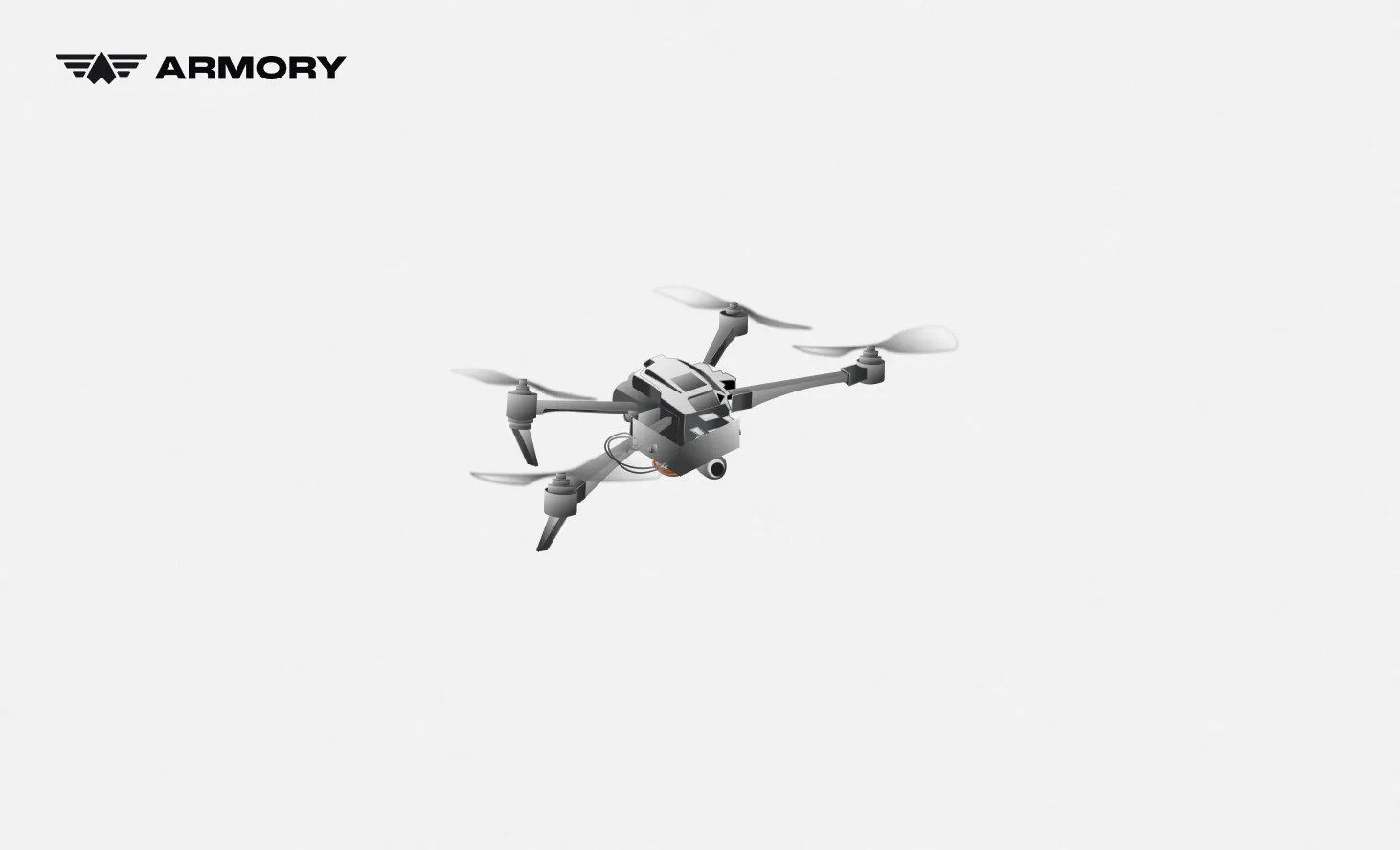
Every time a drone launches, whether it’s delivering packages, mapping farmland, inspecting infrastructure, or flying a patrol, it taps into GPS or GNSS for greater accuracy and reliability. It relies on them as its guiding force in the sky. (1)
The drone’s onboard GNSS receiver calculates its exact position, altitude, and speed in real time. This enables autopilots to follow precise flight paths, hover in place, or return to their launch point if the signal is lost. For high-end applications, like aerial mapping or surveying, multi-GNSS receivers can achieve centimetre-level accuracy by drawing from multiple sets of satellites and, sometimes, using special correction signals.
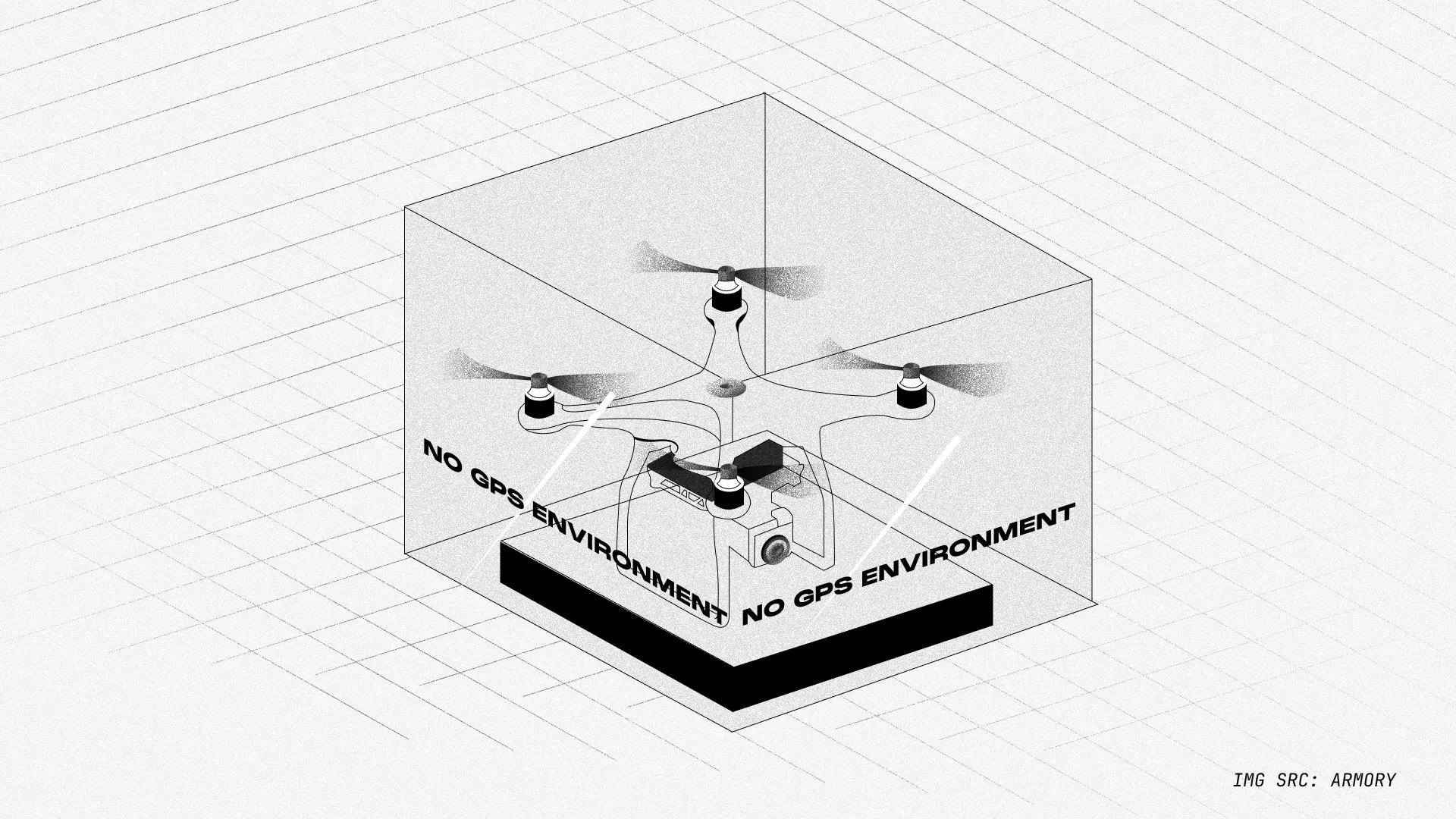
When your goal is to safeguard critical spaces, assets, or borders, these same dependencies of Drones on GNSS become strategic vulnerabilities. Jamming works by sending out strong radio signals that overwhelm the weak GPS or GNSS signals that drones rely on. In practice, a jammer transmits noise or “blocking” signals on the satellite navigation frequencies. As a result, the drone can no longer lock onto its true location; it may hover aimlessly, drift off course, or even land unexpectedly. For anti-drone solutions, jamming is a precise and effective way to halt rogue UAVs before they reach sensitive airspace.
Spoofing is even subtler. Instead of simply denying the drone a navigation fix, a spoofing system transmits crafted, fake GNSS signals. The drone, trusting what it “hears”, thinks it is somewhere else and follows entirely new instructions. This can mean guiding the drone safely back to a landing area, redirecting it away from its target, or causing it to lose effective control. Spoofing lets the defender manipulate the drone’s position, velocity, and timing information in real time, making it possible to take over or neutralize the threat with surgical precision. [2], [3]
The New Resilience of Drones
Null-Steering & Beamforming Arrays
Think of this as surround sound, but reversed. Instead of blasting music in every direction, these anti-jamming antennas in drones listen selectively. Controlled-Reception Pattern Antennas (CRPAs) use multiple elements to electronically steer "nulls". In other words, “turn down the volume” towards jammers while maintaining high gain on authentic satellite directions. Practical installations with eight or more elements routinely achieve 20–40 dB of jammer rejection in field tests, i.e., they can tune out the jammer almost completely, compared to the 0–3 dB of conventional patch antennas (which barely cut the interference). In labs, under perfect conditions, they have exceeded 70 dB of null depth, which is basically like hitting the mute button on a jammer standing right next to you. [4]
Electromagnetic Shielding: FSS & ESS
The drone equivalent of a superhero costume.
FSS (Frequency-Selective Surfaces): Metallic patterns built into the radome (antenna cover) that act like frequency bouncers, only letting in the good GPS frequencies and bouncing the rest. Dual-band designs today suppress more than 35 dB of unwanted noise at GPS L1/L2 (1.575/1.227 GHz) while preserving ±75° angular coverage and minimal insertion loss. [5]
ESS (Energy-Selective Surfaces): Utilizes arrays of PIN diodes that switch under high-power RF exposure, absorbing or reflecting these jamming pulses. Recent prototypes adaptively block more than 80% of the jammer’s power above a programmable threshold, yet remain transparent to normal-power satellite signals. [6]
Multi-Constellation, Multi-Frequency Receivers
Single-constellation GPS receivers require only one jammer or spoofer per band. Modern UAVs instead lock to four GNSS constellations (GPS, GLONASS, Galileo, BeiDou) predominantly on these three frequencies (L1, L2, L5). An attacker must now concurrently jam or forge signals across up to twelve independent bands, a complexity and cost multiplier that drives many adversaries away. [7]
Signal Authentication (OSNMA)
One of the main reasons GNSS spoofing is so effective is that satellite signals usually lack a built-in signature. In other words, your receiver has no way to prove whether the navigation data actually came from a real satellite or from a spoofer broadcasting fake signals. Galileo’s Open Service Navigation Message Authentication (OSNMA) solves this by attaching a cryptographic signature to every navigation message. Using a TESLA-based scheme, drones and receivers can verify the authenticity of a signal within 30–300 seconds. If the math checks out, the data is accepted; if not, it’s discarded. Think of it as the satellite equivalent of a “verified badge”, a lightweight but powerful safeguard that closes the door on cheap replay and signal fabrication tricks. [8], [9]
Multi-Sensor Fusion & Drift Monitoring
Drones now also have the ability to fuse inputs from inertial measurement units (IMU), magnetometers, cameras, and LiDAR to constantly cross-check their position. This redundancy means that if GNSS data suddenly suggests a 20-meter sideways jump while the IMU registers no movement, the system can immediately flag the inconsistency. The same logic applies to spoofers attempting “slow drift” attacks, where false signals gradually shift a drone’s position; onboard clocks can expose the mismatch between authentic GPS timing and the spoofer’s fabricated drift. In practice, some of these checks can trigger alarms in under 100 milliseconds, fast enough to make a decisive difference in contested airspace or even an aerial dogfight. [10],[11]
AI-Driven Anomaly Detection
The newest layer of defence comes from machine learning. Advanced systems like GASx analyse the fine details like Doppler shifts, code-phase errors, and automatic gain control levels (AGC) to spot anomalies. Unlike older “black box” AI, these are explainable models: they don’t just scream “spoof!” or raise a red flag but also tell you why. In 2024 trials, such systems demonstrated detection rates above 95% while keeping false alarms below 0.5%. That means AI can act as the drone’s sceptical co-pilot, flagging anything that doesn’t smell right. [12]
No single trick makes a drone spoof-proof. But stack them together, null-steering antennas behind FSS/ESS shielding, multi-constellation receivers running OSNMA, backed up by inertial sensors and overseen by AI, and suddenly the UAV isn’t an easy mark anymore. Spoofers now face a layered fortress instead of a single open door.
In an age where drones are moving beyond their reliance on satellite navigation, jamming and spoofing have proved not only that we need potent countermeasures but also strategic essentials in securing our airspace. In this cat-and-mouse chase, the ongoing contest between navigation technology and disruption techniques continues unabated. This dynamic arms race highlights the importance of layered defences and continual innovation to effectively safeguard critical spaces from unauthorized drone incursions. Understanding these evolving trends enables more informed and proactive approaches to drone security challenges in the years ahead.
References:
- HGNSS Marketing Communications Department. (n.d.). The use of GPS in UAVs. https://blog.hemispheregnss.com/the-use-of-gps-in-uavs
- Team, I. (2025, August 20). What is GNSS Jamming and How Does Anti-Jamming Work? Infinidome. https://infinidome.com/how-does-anti-jamming-work/
- Khan, S. Z., Mohsin, M., & Iqbal, W. (2021). On GPS spoofing of aerial platforms: a review of threats, challenges, methodologies, and future research directions. PeerJ Computer Science, 7, e507. https://doi.org/10.7717/peerj-cs.507
- GPS World. (2022, August 22). Innovation: Null-steering antennas - GPS World. https://www.gpsworld.com/innovation-null-steering-antennas/
- Idrees, M., He, Y., Ullah, S., & Wong, S. (2024). A Dual-Band Polarization-Insensitive frequency selective surface for electromagnetic shielding applications. Sensors, 24(11), 3333. https://doi.org/10.3390/s24113333
- Lv, J., Luo, C., Zhao, J., Han, H., Lu, H., & Zheng, B. (2025). Development of Energy-Selective Surface for Electromagnetic Protection. Micromachines, 16(5), 555. https://doi.org/10.3390/mi16050555
- Zhang, J., Cui, X., Xu, H., & Lu, M. (2019). A Two-Stage interference suppression scheme based on antenna array for GNSS jamming and spoofing. Sensors, 19(18), 3870. https://doi.org/10.3390/s19183870
- Galileo Open Service Navigation Message Authentication (OSNMA) | European GNSS Service Centre (GSC). (n.d.). https://www.gsc-europa.eu/galileo/services/galileo-open-service-navigation-message-authentication-osnma
- Observer: How Galileo OSNMA helps counter GNSS spoofing. (2025, September 8). Defence Industry and Space. https://defence-industry-space.ec.europa.eu/observer-how-galileo-osnma-helps-counter-gnss-spoofing-2025-09-08_en
- Chu, F., Li, H., Wen, J., & Lu, M. (2018). Statistical Model and Performance Evaluation of a GNSS Spoofing Detection Method based on the Consistency of Doppler and Pseudorange Positioning Results. Journal of Navigation, 72(2), 447–466. https://doi.org/10.1017/s0373463318000747
- Squatrito, A. (n.d.). Machine learning-based GPS jamming and spoofing detection. Scholarly Commons. https://commons.erau.edu/edt/810/
- Fan, Z., Tian, X., Wei, S., Shen, D., Chen, G., Pham, K., & Blasch, E. (2024). GASX: Explainable Artificial intelligence for Detecting GPS spoofing Attacks. Proceedings of the Institute of Navigation . . . International Technical Meeting/Proceedings of the . . . International Technical Meeting of the Institute of Navigation. https://doi.org/10.33012/2024.19543