Cold War 2.0: Welcome to Wars Where No Shots Are Fired.

Heading 1
Heading 2
Heading 3
fcghujiko bhjnkmcvbllxcfgvbhjnkmxcvghbjcfvgbhjnfghjk
Heading 4
Block quote
Ordered list

- Item 1
- Item 2
- Item 3
Unordered list
- Item A
- Item B
- Item C
Bold text
Emphasis
Superscript
Subscript
Heading 1
Heading 2
Heading 3
Heading 4
Heading 5
Heading 6
Lorem ipsum dolor sit amet, consectetur adipiscing elit, sed do eiusmod tempor incididunt ut labore et dolore magna aliqua. Ut enim ad minim veniam, quis nostrud exercitation ullamco laboris nisi ut aliquip ex ea commodo consequat. Duis aute irure dolor in reprehenderit in voluptate velit esse cillum dolore eu fugiat nulla pariatur.
Block quote
Ordered list
- Item 1
- Item 2
- Item 3
Unordered list
- Item A
- Item B
- Item C
Bold text
Emphasis
Superscript
Subscript
The modern war doesn’t start when we see it—it’s lurking, at all times.
Modern wars don’t erupt. They seep into our data, our wallets, and our worldviews before a single shot is fired. The nature of warfare has undergone a radical transformation. While the absolute number of war deaths has been declining since 1946, the global stage is far from peaceful. Some conflicts have shifted inwards, internal divisions are fueling conflict within borders, while the concept of battlefield has expanded. Now encompassing cyberspace, financial systems, and the war of minds1.
Pre-emptive Strikes Without Missiles
In December 2015, Ukraine experienced a cyberattack which left over 2,00,000 residents without power. Hackers infiltrated the control centres of three electricity distribution companies, Prykarpattyaoblenergo, Chernivtsioblenergo, and Kyivoblenergo, remotely accessing SCADA systems and opening breakers at approximately 30 distribution substations. This incident marked a significant example of how cyber warfare can disrupt critical infrastructure without any physical invasion2.
No bombs were dropped. No boots on the ground. But the blackout was paralysing.
Today, most developed nations consider cyberattacks grounds for retaliation under Article 5 of NATO’s collective defence policy3.
AI: The Invisible Hand in Defence
In today’s battles, AI doesn’t wait for orders, it gives them.
Artificial Intelligence isn’t just an assistant in warfare—it’s becoming the strategist. In 2020, an AI-piloted F-16 fighter jet defeated a human pilot in a dogfight simulation run by the Pentagon’s Defence Advanced Research Projects Agency (DARPA).4 This wasn’t science fiction; it was a glimpse into a future where decision-making in combat happens faster than any human could react.. This wasn’t science fiction; it was a glimpse into a future where decision-making in combat happens faster than any human could react.
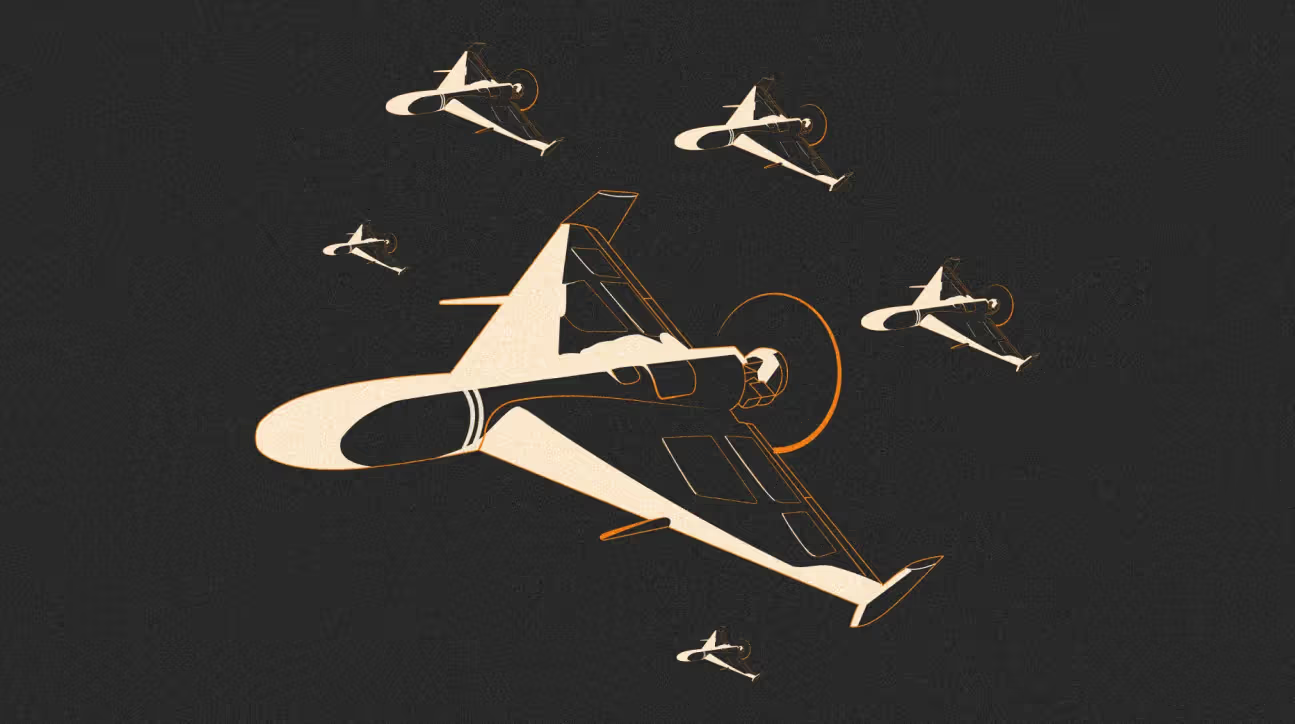
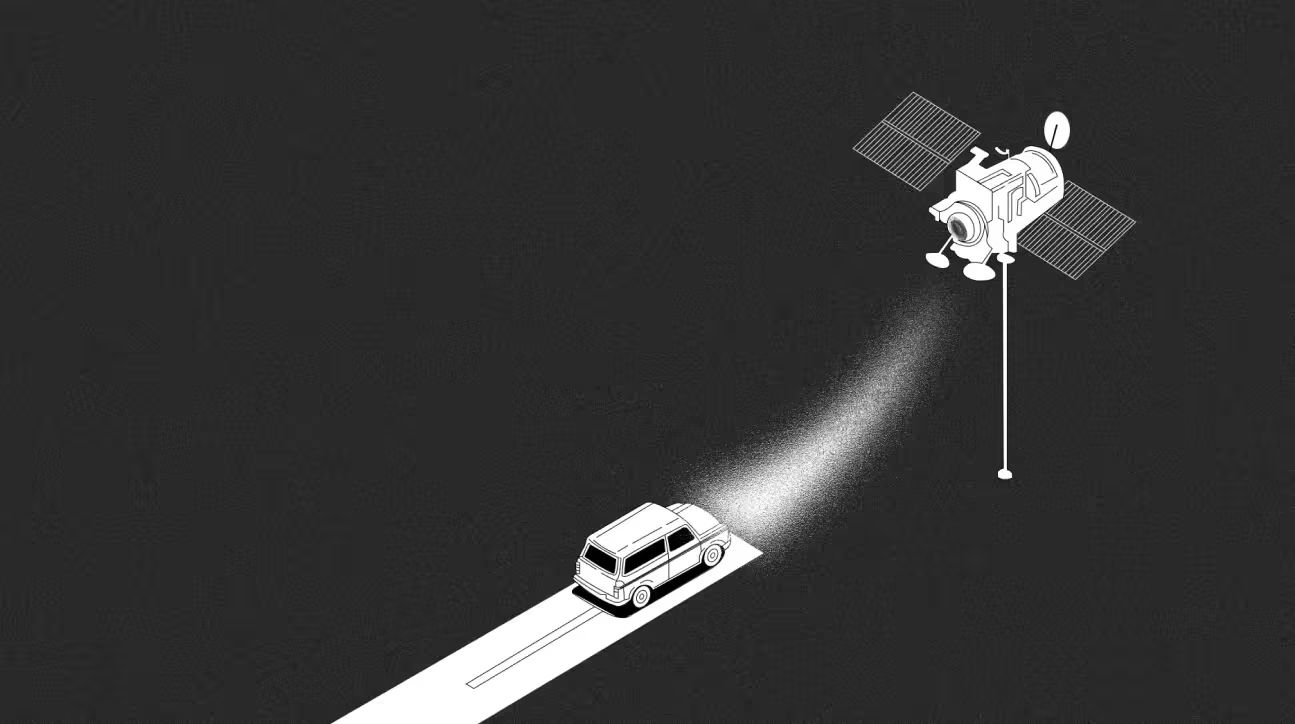
AI-driven surveillance systems can track enemy movements with near-perfect, granular accuracy, autonomous drones can execute missions without direct human control, and machine learning algorithms are reshaping threat detection and situational awareness. In Ukraine, AI-powered software has been used to analyse satellite images and pinpoint Russian troop movements in real time5. It also raises a new age concern of psychological warfare, because when machines make life-or-death decisions faster than humans can comprehend, accountability becomes a ghost.
The race is no longer about who has the most firepower—it’s about who has the smartest battlefield intelligence. AI isn’t just reshaping modern warfare, it’s redefining who, or what, makes the final call in combat.
AI doesn’t get tired. AI doesn’t hesitate. AI doesn’t flinch. AI doesn’t blink.
Weaponised Misinformation: When Perception Becomes Reality
Why fight a war when you can convince your enemy they've already lost? Psychological warfare, fueled by AI-generated propaganda and deepfake technology, is shaping public perception and destabilising governments. Disinformation is no longer spam, it’s a surgical strike on public perception. Once a platform for connection, social media has become a weaponised echo chamber, where narratives are engineered, elections manipulated, misinformation amplified, and societies fractured from the inside out.

A striking example of this would be the viralisation of an AI-generated image of a false explosion near the Pentagon, shared by verified Twitter accounts, which caused a rapid and dramatic dip in the US Stock Market, before the hoax was exposed. Disinformation isn’t confined to autocracies. This isn’t information warfare. It’s belief warfare6 7.
Another prominent example of this would be the recent tension between India and Pakistan’s air warfare, which was also accompanied by psychological warfare, with AI-generated images, videos, misinformation regarding the attacks and counterattacks made, weapons used, and more. From the news of the Pakistan Army crashing Indian Rafale’s (debunked as MiG-21 fighter jet that was crashed during a training exercise in May 2021, in Punjab), Amritsar on fire (later debunked as a fire that occurred at a landfill in Delhi), explosions heard near Jaipur airport (by TimesNow, later mention), and more8 9.
The Indian Government was quite prompt in debunking all the viral fake propaganda published by either country’s news media. What is astonishingly comical is that Pakistan’s Defence Minister Khwaja Asif claimed on CNN that their forces downed Indian jets in a retaliatory 'dogfight’, a statement he substantiated not with military data or official footage, but with social media clips. 'There are videos all over,' he noted on CNN, suggesting that virality might now count as verification10.
Economic Warfare: The Battle No One Sees
Warfare has quietly extended into boardrooms and central banks. By cutting off a nation's access to critical technologies or resources, adversaries can cripple their defense capabilities without ever engaging in open militarily. Economic warfare is slow, quiet, and devastatingly effective.
Case in Point: The United States, after Trump’s return, has increasingly used its financial and technological dominance as powerful foreign-policy tools by imposing sanctions on adversaries like Iran, North Korea, and Russia, while signalling friction even with traditional allies11.
Drones vs. Counter-Drones: A Silent Arms Race
For every drone in the sky, there needs to be a counterforce on the ground. Quietly tracking, jamming, and neutralising in real time.
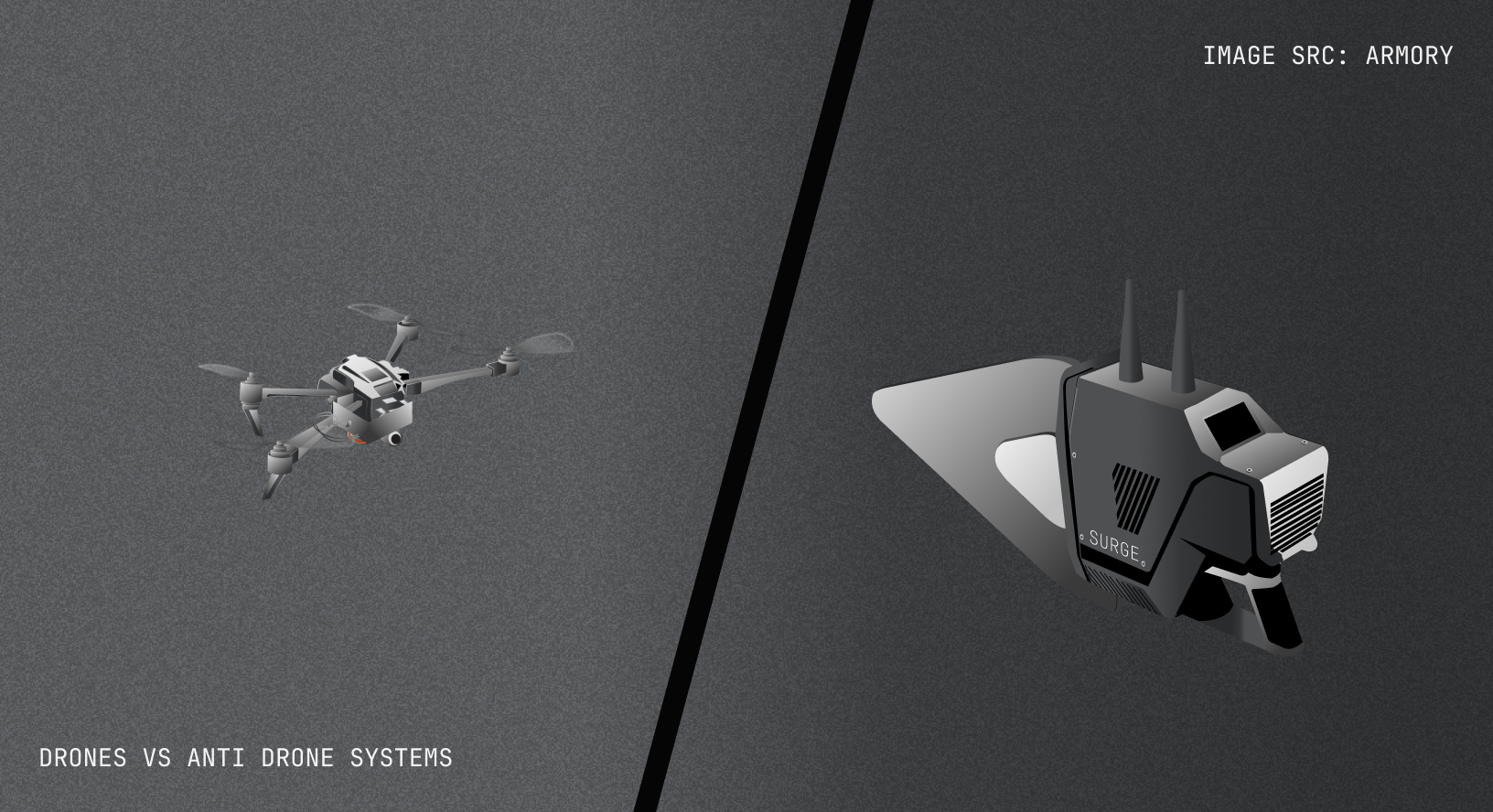
The battlefield has become saturated with drones: Surveillance, Strike, Swarm, Kamikaze. But what’s less discussed is the race to counter them. Anti-drone technology, hardkill or softkill—laser systems, radio-frequency jammers, AI-powered tracking—is becoming just as crucial as the drones themselves. The goal isn’t always to destroy; it’s to disable, deceive, or redirect. The unseen battle between drones and counter-drone systems is already shaping the future of military conflicts.
This isn’t just a military concern. Airports, oil refineries, and even public events now demand civilian-grade counter-drone solutions. The race to neutralise drones is as critical as the race to deploy them.
The War That Ends Before It Begins
Modern warfare is no longer about brute force—it's about control, perception, and preemption. Victory no longer hinges on destruction, it hinges on control. The ability to neutralise a country’s power grid, fracture its public unity, cripple its economy, and distort its truth, all without traditional combat, is the ultimate high ground.
The real question is—are we ready for a world where wars are fought and won before we even know they've begun?
- United Nations. (n.d.). A new era of conflict and violence | United Nations.
- Walstrom, M., & Park, D. (11 C.E., October). Cyberattack on critical infrastructure: Russia and the Ukrainian power grid attacks. | The Henry M. Jackson School of International Studies. Retrieved October 11, 2017,
- Nato. (n.d.). Collective defence and Article 5. | NATO.
- AlphaDogfight Trials foreshadow future of Human-Machine symbiosis. (n.d.). | Darpa
- Ukrainian officials now using facial recognition tech to ID Russian soldiers. (n.d.). - Global Governance.
- Coombs, A., Coombs, A., & Coombs, A. (2024, October 25). Persuade, Change, and Influence with AI: Leveraging Artificial Intelligence in the Information Environment. |Modern War Institute
- O’Sullivan, D., & Passantino, J. (2023, May 23). ‘Verified’ Twitter accounts share fake image of ‘explosion’ near Pentagon, causing confusion. | CNN.
- India, T. O. (2025, May 10). Fake news alert: Government fact checks “Pakistani propaganda” on Operation Sindoor. |The Times of India.
- Parthasarathy, A. (2025, May 10). Fact-check: False claims surrounding Operation Sindoor flood social media amid India-Pakistan conflict.| The Hindu.
- Online, F. (2025, May 7). Pakistan Defence Minister asked for proof of shooting down IAF jets, he answers ‘it’s all over social media videos. . .’ | Watch. Financial Express.
- Thal Larsen, P. (2025, March 5). Europe will struggle to slip US economic chokehold. Reuters.